
Five Releases in Six Days
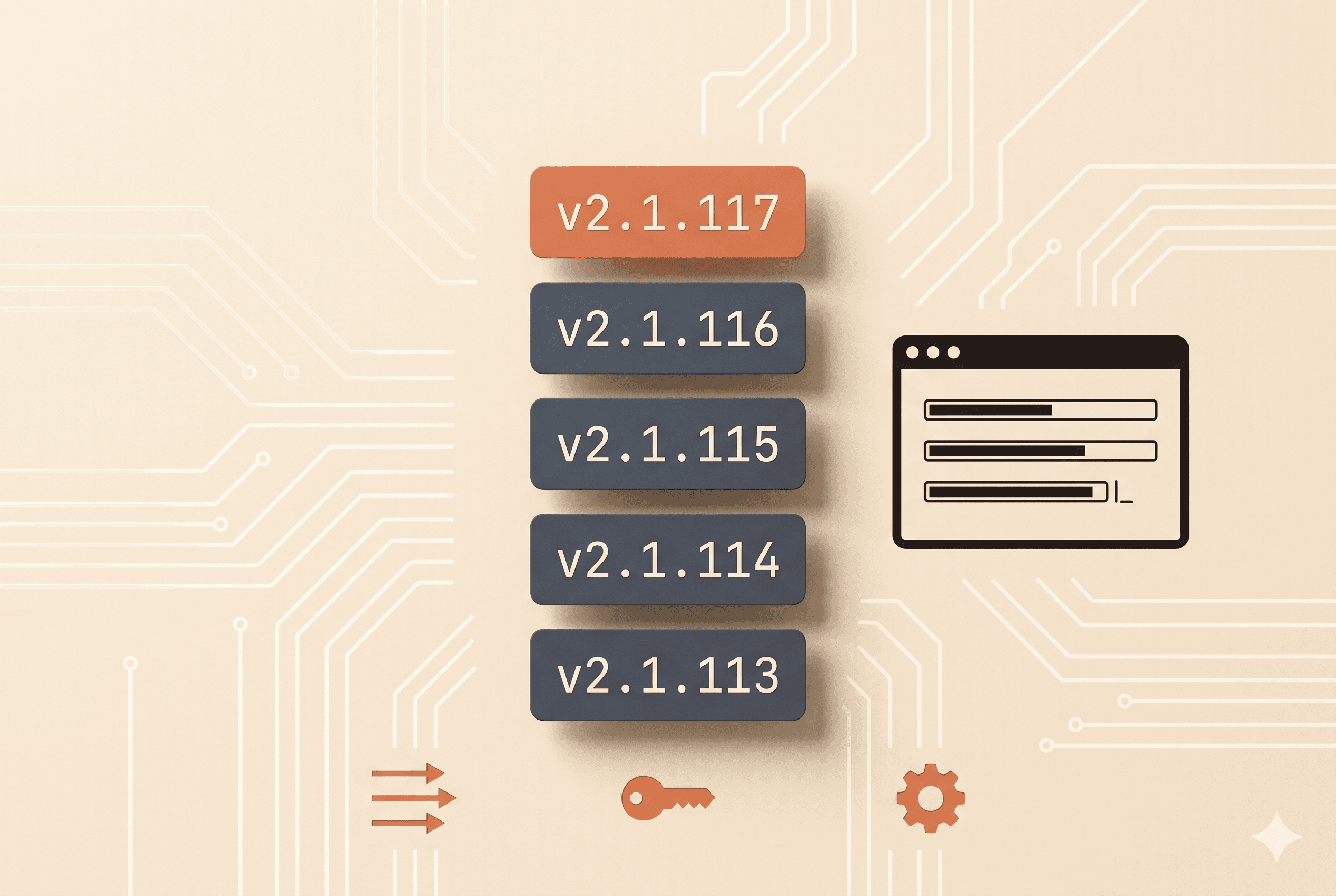
Claude Code shipped a dense run of releases between April 17 and April 22, 2026. Versions 2.1.113 through 2.1.117 landed in quick succession, each adding a mix of visible quality-of-life improvements and quieter under-the-hood changes. The headline features are faster startup, persistent model selection, a rewritten /resume command, inline thinking progress, and a move from bundled JavaScript to a native CLI binary.
If you use Claude Code daily, several of these changes are real improvements. A few are more subtle than the changelog suggests. Here's a release-by-release breakdown of what matters, what's quietly important, and what's marketing polish.
TL;DR
- v2.1.113 (April 17): CLI moved to native binary, /loop workflow gets Remote Control support, Windows Ctrl+Backspace now deletes a word. Bash sandbox security hardened.
- v2.1.114 (April 19): Minimal patch that fixes a crash in the permission dialog when teammates request tool access.
- v2.1.115 (April 17): Fixed the "claude-opus-4-7 is temporarily unavailable" error in auto mode.
- v2.1.116 (April 21-22): /resume now 67% faster on large sessions, fullscreen scrolling smoother in VS Code, thinking progress shows inline.
- v2.1.117 (April 22): Concurrent MCP server connections (faster startup), model selection persists across restarts, OAuth token refresh fixed, WebFetch no longer hangs on large HTML.
- Net impact: Fewer friction points, slightly faster daily workflows, and a meaningful security hardening pass. If you were on 2.1.112 or earlier, this is a worthwhile upgrade.
What Changed, Release by Release
v2.1.113 (April 17, 2026): Native binary, /loop, Windows polish
The biggest change in this release is invisible to most users: the CLI now spawns a native binary instead of a bundled JavaScript runtime. For most developers this shows up as a faster cold start (claude takes noticeably less time to initialize) and lower memory footprint. If you run Claude Code in a CI environment or a resource-constrained container, the improvement is larger.
The /loop workflow got Remote Control support. /loop lets you run Claude Code in an iteration mode, where each loop cycle can be paused, inspected, or overridden from an external controller. Remote Control means that external interface is now networked: you can have one Claude Code session running on a development VM while you oversee it from your laptop, pausing and nudging it from outside. Niche but important for teams running long-form agent workflows.
Windows users: Ctrl+Backspace now deletes the previous word instead of a single character. This aligns with standard Windows editor behavior and removes a small daily annoyance. Small fix, nice to have.
Bash sandbox security checks were strengthened. The public changelog is vague on specifics, but the combination of "bash sandbox" and "security checks" points to the tooling that decides which shell commands Claude Code can run without prompting for explicit permission. Tightening these is good hygiene; the tradeoff is you may see slightly more permission prompts for edge cases that used to auto-allow.
v2.1.114 (April 19, 2026): One-line fix for a team-use crash
Small patch. If you're in a Claude Code team environment where teammates can request tool access to each other's sessions, a crash could happen when that permission dialog opened. This release fixes that. If you don't use shared tool access features, nothing in this release matters to you.
Worth noting because it's a sign that Anthropic is actively shipping hotfixes for rarer edge cases quickly. Two days from bug report to patch, which is the right speed for a developer tool.
v2.1.115 (April 17, 2026): Opus 4.7 auto-mode fix
The "claude-opus-4-7 is temporarily unavailable" error in auto mode was a real productivity killer in the days after Opus 4.7 launched. Auto mode is Claude Code's routing logic that picks between Opus, Sonnet, and Haiku based on task complexity. When Opus 4.7 dropped, the auto mode's fallback logic didn't handle brief Opus availability gaps gracefully, so you'd get a loud error instead of a silent fallback to Sonnet 4.5.
This release makes that fallback quiet. Auto mode now handles temporary Opus unavailability by silently routing to Sonnet for that request and returning to Opus on the next one. Result: fewer "sorry, Opus is briefly unavailable" popups interrupting flow.
v2.1.116 (April 21-22, 2026): /resume performance and UI polish
/resume is how you pick up a past Claude Code session. If you've ever had Claude Code crunching on a 40MB+ conversation history, you've waited for /resume to load. This release is 67% faster on those large sessions. Session summarization is now offered as an option when the session is too stale or too large to resume in full, which is a cleaner UX than loading a massive context and hoping it still makes sense.
Fullscreen scrolling in VS Code and similar editors is smoother. If you're reading long Claude output through the integrated terminal and scrolling feels less janky, this is why.
The inline thinking progress is the other visible change. Instead of just showing a spinner, Claude Code now displays text that tells you what mode of thinking it's in: "still thinking," "thinking more," "almost done." This is minor but surprisingly useful when you're waiting on a long response. Knowing the model is still actively reasoning versus stuck in some infinite-retry state changes how patient you're willing to be.
/config search now matches option values, not just option names. Small but nice. If you've been typing parts of values into search and getting no results because search only matched on name fields, that's fixed.
v2.1.117 (April 22, 2026): MCP concurrency and session persistence
The biggest practical win in this release is concurrent MCP server connections. If you use Model Context Protocol servers (which is increasingly common for Claude Code users with custom tools), the CLI used to connect to them sequentially during startup. With several MCP servers configured, startup could take several seconds. Concurrent connection reduces that to whatever the slowest single server takes, typically subsecond.
Model selection persists across restarts. Previously if you switched from Opus to Sonnet mid-session, that choice reset to default when you opened the CLI next time. Now it persists. If you're like many users who prefer Sonnet as the daily driver and only switch to Opus for specific hard tasks, this removes the daily friction of re-setting your preference.
The plugin dependency error messaging is clearer. Previously if a Claude Code plugin had a dependency mismatch, the error would be opaque. Now it tells you which plugin, which dependency, and what version is expected. Saves 5 minutes of debugging.
Two specific bug fixes worth noting:
- OAuth token refresh now works reliably. Users who signed in via OAuth (most common flow) sometimes experienced silent token expiration that required a full re-login. Fixed.
- WebFetch no longer hangs on large HTML. WebFetch is Claude Code's built-in web retrieval tool. On some sites with very large responses (massive documentation pages, single-page apps with huge DOM dumps), WebFetch could hang indefinitely. Now it times out cleanly and returns what it has.
What These Releases Tell Us About Claude Code's Trajectory
Taken together, these five releases signal a few things about where Claude Code is heading.
Performance is now a first-class concern. Earlier Claude Code releases focused heavily on capability expansion: new tools, new model routing, new agent modes. April's releases are disproportionately about making what already exists faster and less janky. Faster MCP startup, faster /resume, faster cold start, smoother scrolling. This is what a product starts doing when feature velocity slows and customer retention becomes the priority.
MCP is becoming a standard part of the flow. Two of the five releases touched MCP behavior (concurrent connections in 2.1.117, plugin dependency messaging in the same release). Anthropic is clearly treating MCP as table-stakes infrastructure, not an experimental feature. If you haven't looked at MCP servers for your workflow, the tooling is increasingly mature enough to be worth the investment.
Security hardening is continuous. The Bash sandbox tightening in 2.1.113 is the kind of change that happens when a security review finds a class of edge cases that used to auto-allow. No big announcement, just a quieter set of permission checks. Expect more of these as Claude Code gets deployed into more enterprise environments where the threat model is stricter.
Windows support is now actively maintained. Ctrl+Backspace behavior. Native binary (which helps Windows specifically because Windows had worse performance on the bundled JS runtime). These are signs that the Windows developer audience is being taken seriously, not just as a tertiary target.
Practical Upgrade Guide
If you're running Claude Code, updating is straightforward:
npm install -g @anthropic-ai/claude-code@latest
Or on macOS with Homebrew:
brew upgrade claude-code
There are no breaking changes between 2.1.112 and 2.1.117 that affect normal use. Config files, CLAUDE.md conventions, slash commands, and plugin interfaces are all backward-compatible.
Two post-upgrade recommendations:
Restart any long-running sessions once. The model-selection-persistence and MCP concurrency fixes only kick in on fresh sessions. One-time restart gets you the benefit.
If you use MCP, check your config. The concurrent connection logic is a little more strict about malformed MCP server configs. Previously some typos in MCP server definitions would silently fail but not block startup. Now they surface as errors. Take 2 minutes to make sure your .mcp.json or equivalent config is clean.
What's Not In These Releases
A few things that were rumored or in preview are notably absent:
- Native Apple Silicon speed-ups are still in beta. The native binary in 2.1.113 helps, but the deeper ARM64 optimization pass is on track for a later release.
- The Claude Code Cowork integration (which would let Claude Cowork control Claude Code sessions) is not yet shipping. Still announced as "later in Q2."
- Plugin marketplace has not surfaced. Anthropic has mentioned wanting a discoverable plugin ecosystem. No dates.
- GitHub Actions integration for running Claude Code in CI is still third-party only. Anthropic has not shipped a first-party action.
Honest Take
This release run is unambiguously good for Claude Code users. None of the changes are flashy, but every one of them removes a real friction point. If you'd asked power users which five improvements they most wanted in late March 2026, you'd probably get a list that looks a lot like what actually shipped.
The bigger signal is pace. Five releases in six days, including hot fixes within 48 hours of bug reports. That's healthy maintenance velocity. Products that lose their way usually slow their release cadence first. Claude Code's cadence is accelerating, which means Anthropic is investing in it as a real product, not a research demo.
The only caveat is the pricing uncertainty from April 21-22. This week's shipping velocity shows what you're paying for at $20/month Pro. Whether that tier survives the next pricing review is a separate question I covered elsewhere.
Related Reading
- Claude Code Pro Pricing Test - what the $20 vs $100 tier question looks like right now
- Claude Opus 4.7 vs 4.6 Benchmarks - the model powering Claude Code auto mode
- Claude Code vs Cursor - the head-to-head comparison
- Best Claude Code Plugins 2026 - plugin ecosystem overview
- Claude Skills vs MCP - the distinction that matters now that both are first-class
Sources
- Claude Code by Anthropic Release Notes (Releasebot)
- Anthropic Release Notes April 2026 (Releasebot)
- Claude Platform Release Notes (official Anthropic)
Questions about which features to actually use daily, or want help integrating MCP servers into your Claude Code workflow? Reply on the newsletter and I answer every email.